Mike Madigan, the longest-serving legislative leader in U.S. history, took the stand in his federal corruption trial in Chicago, where he faces bribery and racketeering charges. Known as the “Velvet Hammer” for his quiet yet unrelenting grip on power, Madigan denied all allegations, stating that he never traded his public office for personal gain during his nearly four decades as Speaker of the Illinois House of Representatives.
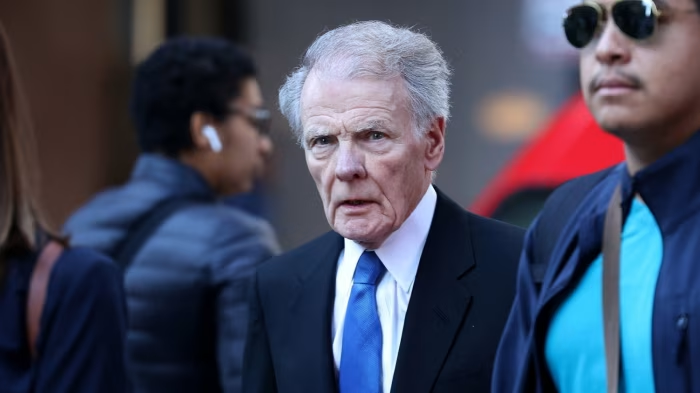
Madigan, now 82, surprised many by testifying in his own defense, marking a dramatic moment in a trial that has captivated Chicago—a city long associated with political corruption. The trial, entering its final stages, caps a decade-long federal investigation that has already resulted in multiple convictions, including the former CEO of utility giant Commonwealth Edison (ComEd) and a prominent city council member.
Prosecutors allege Madigan ran a criminal enterprise, exchanging political favors for personal enrichment and to consolidate his political power. Among the accusations is that he worked with ComEd to secure no-show jobs for his allies in exchange for favorable legislation. Madigan has pleaded not guilty.
Madigan’s rise began on the South Side of Chicago, where his father’s political connections introduced him to the Democratic machine led by Mayor Richard J. Daley. Over the years, Madigan transformed the 13th Ward Democratic Organization into a political powerhouse, becoming Speaker of the Illinois House in 1983, a position he held for all but two years until 2021.
Madigan’s tenure as Speaker coincided with Illinois accumulating USD 144 billion in unfunded pension liabilities, a financial burden that continues to plague the state. Despite his political dominance, Madigan maintained a private persona, famously shunning modern technology and adhering to a strict routine that included eating just one apple for lunch each day.
The prosecution’s case heavily relies on testimony from Danny Solis, a former Chicago city council member turned FBI informant. Solis recorded conversations with Madigan, which prosecutors argue demonstrate a “quid pro quo” arrangement. In one recording, Solis claimed a developer hired Madigan’s law firm in exchange for favorable zoning changes. On the stand, Madigan dismissed the allegations, expressing regret over his interactions with Solis.
The trial also delves into the broader culture of corruption in Chicago, a city that has seen over 1,800 public officials convicted on corruption charges since 1976. Madigan’s case represents the culmination of a systemic problem that has defined Illinois politics for decades.
As the trial nears its conclusion, attention turns to the jury’s instructions, particularly in light of a recent Supreme Court ruling that narrows the definition of bribery. The case against Madigan hinges on proving that bribes were exchanged with the explicit intent of influencing future actions, a standard complicated by evolving legal interpretations.
Whether Madigan is convicted or acquitted, his trial serves as a landmark moment in Chicago’s long history of political corruption, raising questions about accountability and the enduring influence of machine politics.
Source: Financial Times, January 22, 2025